
Dubai Real Estate 2025–26: What’s Changing — Supply, Smart Living & What It Means for Investors
Dubai’s real estate market is evolving rapidly. After a boom driven by post‑pandemic demand, 2025 is seeing a wave of new supply, changing buyer preferences, and a shift toward smart, sustainable living. For developers, investors and brokers — it’s time to adapt.
What the Numbers Say: Supply Surge, Price Trends & Rental Stability
- According to a mid‑2025 update, approximately 17,200 residential units were completed in the first half of the year, and over 61,800 units remain under construction for the rest of 2025. ([Cavendish Maxwell][1]
- Despite strong supply inflows, the momentum of price rises continues: residential sales prices recorded a +16.6% year‑on‑year increase compared to H1 2024, with a 7.8% rise compared to H2 2024. ([Cavendish Maxwell][1])
- On the rental side, rents remain robust. Rent growth in many areas remains positive, and yields for apartments are estimated between 6%–8.5%, with some short‑term rental properties delivering even higher yields. ([SBJ Real Estate][2])
- The market also shows healthy demand: a recent report recorded 98,726 transactions worth AED 327 billion in the first half of 2025 across the UAE, with Dubai leading significantly. ([Property Finder][3])
What it tells us: More options and new developments are entering the market — yet demand remains high, especially for well‑located apartments and villas, keeping both sales and rents on an upward trajectory.
Lifestyle Shift: Smart, Mixed‑Use & Community Living Gains Momentum
Recent studies and market commentary suggest that the buyer mindset in Dubai is shifting. It’s no longer just about luxury villas or speculative investment — today’s buyers and renters care about amenities, convenience, lifestyle and sustainability.
- The rise of mixed-use and “vertical village” developments is one of the defining shifts in 2025. These projects combine residential units with offices, retail, leisure and community services — providing a walkable, integrated living experience. ([Dubai Property News][4])
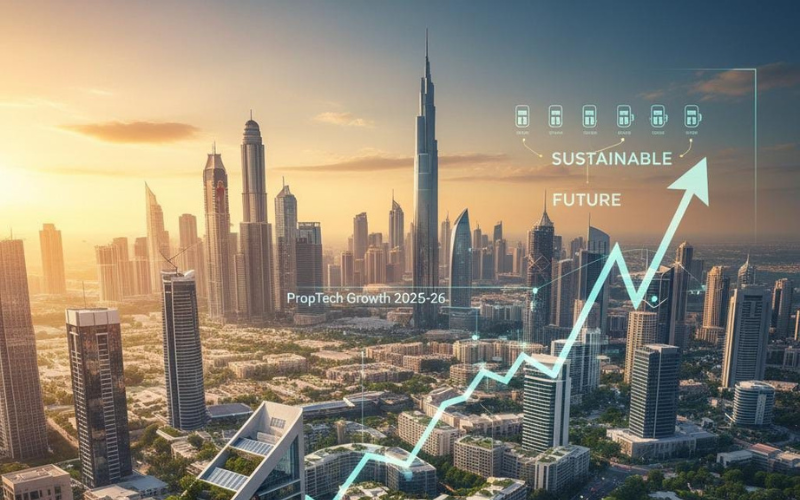
- At the same time, PropTech (property technology) and sustainability-focused living are becoming mainstream. Dubai’s PropTech adoption — including smart building automation, energy-efficient systems, blockchain‑enabled transactions and virtual/augmented reality tours — has surged in recent years. ([DubaiRealeStateHub.AE][5])
- For many buyers, especially younger expats, professionals, and remote workers, convenience and lifestyle features (wellness amenities, integrated living, connectivity, modern infrastructure) are now as important as location or price. ([Vista Oasis Dubai][6])
What it means: Developers and investors who lean into these lifestyle and tech‑forward trends could attract a growing segment of buyers and tenants — especially those seeking long-term quality of life, not just appreciation.
Supply Surge ≠ Uniform Demand — Segment & Location Matter
The market is no longer uniform. As supply increases, the importance of segment, location and buyer profile becomes more critical:
- Much of the new supply is in apartments, particularly in master‑planned or peripheral communities. ([Global Property Guide][7])
- Price growth and demand remain strongest for well‑located apartments, villas, and properties with amenities — especially in communities offering good connectivity or integrated lifestyle. ([Cavendish Maxwell][1])
- Some markets and segments are showing early signs of moderation. For instance, while rental yields remain decent, and sales prices continue trending up, the pace of growth appears to be stabilizing, not accelerating. ([Cavendish Maxwell][1])
Implication for investors: Success will depend on careful targeting — focusing on prime or amenity-rich segments, choosing communities with long-term lifestyle value rather than speculative pricing, and considering both yield and quality-of-life appeal.
Why This Matters — Buyers, Investors, and Developers Should Recalibrate Strategy
For Buyers & End-Users
- If you’re renting or buying for living (not flipping), now’s a good time: more supply means better choice, newer properties and better lifestyle amenities.
- Mixed-use and PropTech-enabled developments could offer better long-term convenience and quality of living.
For Yield-Oriented Investors
- Rental yields remain attractive, especially in well-located apartments and villa communities.
- Demand from expatriates, professionals, and long-term residents seems stable — especially in communities offering convenience, access and amenities.
For Developers & Brokers
- Project positioning matters more than ever: mixed‑use, smart‑home, and amenity‑rich projects have a competitive edge.
- Over-reliance on speculative investors or volume-driven off‑plan sales could create risk, especially with increased supply coming from 2025–2027.
- Building long-term value (community, lifestyle, infrastructure) — not just selling on price or short-term gains — will likely yield better results over time.
📊 Data Snapshot — Key Metrics (2024–2025)
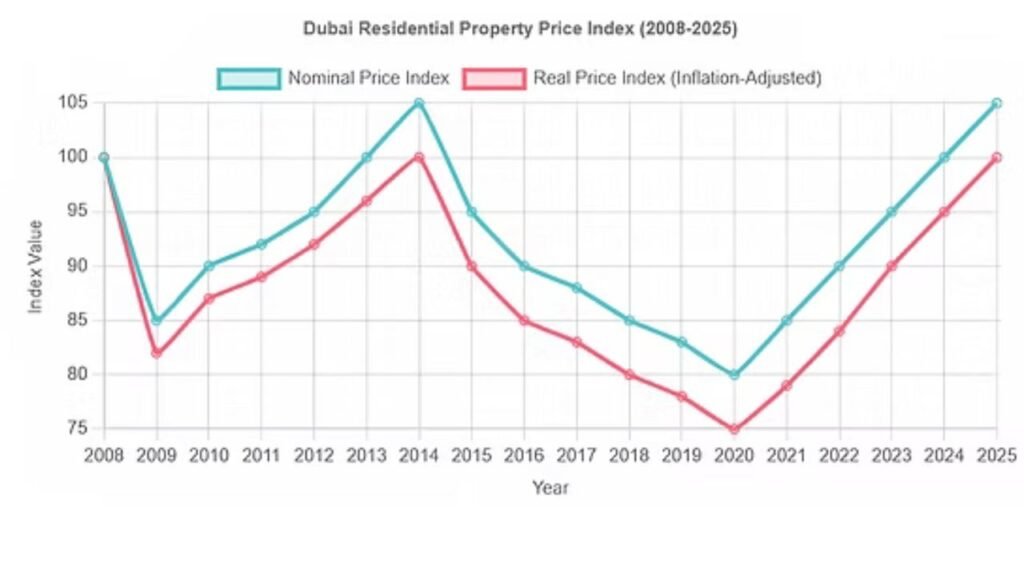
Below is a simplified data chart summarizing recent trends in Dubai’s real estate market (supply, price growth, rents, yields).
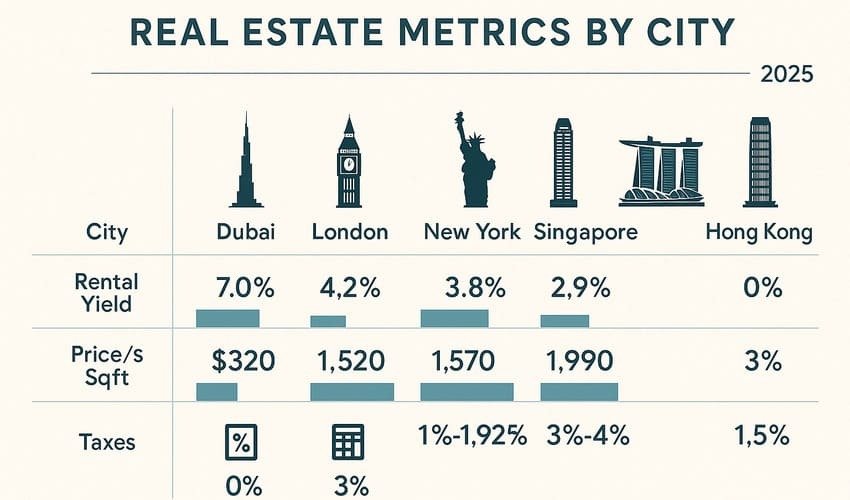
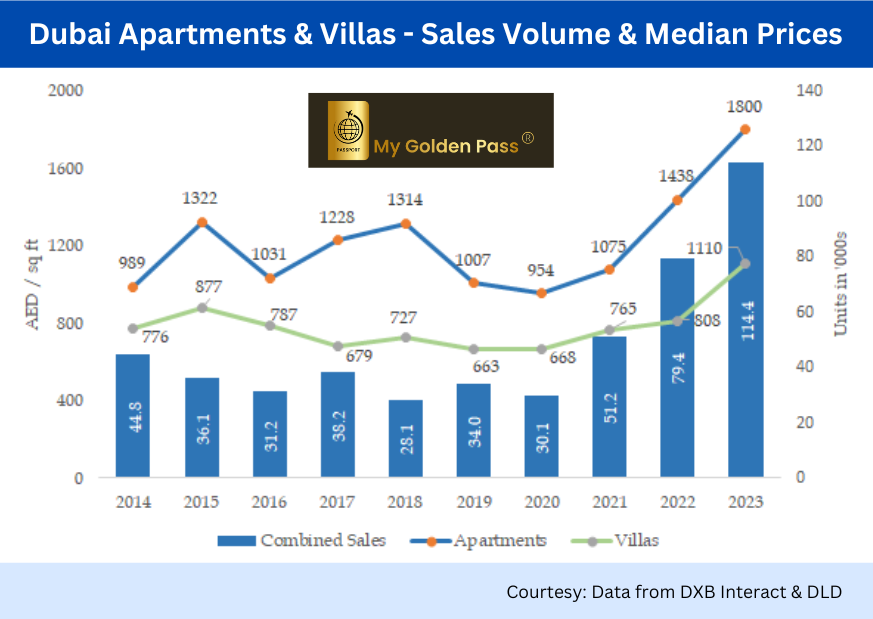
| Metric / Indicator | Recent Trend (2024 → 2025) |
| Completed residential units (H1 2025) | ~ 17,200 homes ([Cavendish Maxwell][1]) |
| Under‑construction / upcoming units | ~ 61,800 units (rest of 2025) ([Cavendish Maxwell][1]) |
| Annual residential sales price growth | +16.6% Y‑o‑Y (H1 2025 vs H1 2024) ([Cavendish Maxwell][1]) |
| Typical gross rental yield (apartments) | ~ 6–8.5% (some short‑let 8–10%+) ([SBJ Real Estate][2]) |
| Share of mixed‑use / PropTech‑enabled projects | Growing strongly as per 2025 trend reports ([Dubai Property News][4]) |
So, what’s the Outlook?
Dubai’s real estate market in 2025–26 is entering a maturity phase, moving away from speculative frenzy. The macro drivers — population growth, expatriate influx, foreign investment, tourism, visa reforms — remain strong, but supply is catching up. The winning formula now is value, lifestyle, and long-term utility rather than short-term flipping.
If you are a developer or investor: prioritize mixed-use, tech-enabled, lifestyle‑oriented projects.
If you are a buyer or tenant: there’s good reason to believe that demand will stay robust — especially for well-located, amenity-rich properties.
Dubai’s real estate future isn’t about boom-and-bust anymore — it’s about sustainable growth, diversified demand, and thoughtful development.